November brings a transition to shorter days, colder weather and spending more time indoors. It also brings anticipation, planning and preparation for Thanksgiving and the upcoming winter holidays.
Our checklist this month includes small, quick and easy tasks you can do now to get a jump start on your holiday hosting preparation so you can enjoy friends and family when they arrive.
Replace chair floor protectors. Prevent damage to your hardwood floors by adding or replacing floor protection pads to the legs of your chairs. Hardware stores sell felt self-adhesive protectors that are easy to use.
Clean garbage disposal. Run a few pieces of lemon rind with some ice cubes through your garbage disposal to keep it smelling fresh. The ice chunks scour the blades and scrape away debris. Products that clean and deodorize garbage disposals can also be purchased in retail stores.
Repair plumbing issues. Fix a slow drain or a stuck garbage disposal now rather than wait until you have a full house of guests.
Check bathtub caulk. Use diluted bleach to clean caulk that is moldy or mildewed. Avoid water damage to your home’s framing by replacing worn-out caulking as soon as possible.
Stock up for winter. Buy winter supplies like shovels and ice melting products now so you’ll be ready when the first snow falls.
Silence squeaky door hinges. Spray some cooking oil or other lubricant on door hinges. Be sure to first place a drop cloth on the floor to protect it and also blot the hinge with a rag to remove excess oil.
Clean kitchen exhaust fan filter. Remove kitchen exhaust fan screen and scrub with a mild detergent or run through the dishwasher.
Check fire extinguishers. Locate your fire extinguishers and be sure their gauge shows enough pressure.
Set aside a November afternoon to do the items on this home maintenance list, then sit back and enjoy a cup of hot apple cider. Happy Thanksgiving!
For more information about Windermere Evergreen please contact us here.
I could spend ages talking about everything there is to learn from remodeling your house: the best types of tile for a shower floor, little details that you shouldn’t overlook when remodeling, tips and tricks for finishing a project on time — you name it.
But a remodeling project, being a rather noteworthy life experience, can also teach you a lot about yourself. No, I’m not talking about your tastes or preferences (for example, you learn that you love the color blue on your walls or you learn that you really just don’t like remodeling). Rather, it can teach you about some characteristics you never knew you possessed, or at least never had the opportunity to focus on — the good and the bad. Here are some things you might learn about yourself.
1. You’re more impatient than you thought. Remodeling will — I repeat, will — test your patience. It doesn’t matter whether you’re a dedicated yogi who can sit and meditate for hours at a time or a hobbyist who works late into the night tirelessly assembling detailed ships in bottles. Weather delays, unforeseen problems (wait, there’s mold behind that wall?), busy trade schedules — it’s almost impossible to have a remodeling project without a delay or two. And when it’s your project with the delays, you might just find yourself repeating the mantra of kids stuck in the family car during a road trip, “Are we there yet?” Or more specifically, “Are we done yet?”
2. You’re adaptable. Bathroom remodels and kitchen remodels are notorious for, well, making bathrooms and kitchens unusable while they’re under construction. At the beginning this might seem like a major inconvenience (truth be told, it is!), but by the end you might be thinking “Who really needs a full kitchen?” After all, there are so many small appliances loved by college students and remodeling survivors alike — toaster ovens, microwaves, slow cookers, camping stoves.
Bathroom remodels can be easy to work around if you have another bath that isn’t under renovation, or a next door neighbor who is fairly generous, or membership in a gym with clean showers. Remember, creativity and adaptability are your friends. So embrace your inner MacGyver.
3. You want in on the action. It starts small: At first, you’re just chatting with your contractor about the status of your project — normal stuff. But as time goes on, you can’t help but ask questions about the more technical side of things. Some people might find details about tile installation eye-rollingly boring, but you’re intrigued.
Suddenly, you find yourself searching for home improvement how-to books and classes on design. You may even start planning your second project (which you’re considering doing yourself) or looking for houses you think you’d like to flip. Watching your own home transform before your very eyes has been an exciting process, no doubt, and now you’re ready to try your hand at it. Don’t be surprised if at first you just want the process to be over, only to find that you never want it to end.
4. Your relationships can (probably) weather any storm. If the space you’re remodeling is a place that you share with someone else (whether it be your spouse, children or others), it’s likely that you’ll feel a little more stress than if you were just remodeling your own personal space.
Every stress that you feel about the remodel, they probably feel as well. Every worry you have about budgets and schedules and paint colors, they have too. Pour all that stress into a small group of people who live together, and, well … things can get messy.
But when you finally see the light at the end of the tunnel, you realize that all that pressure was worth it, because you and your people have a beautiful new space to use for years to come. It probably took some compromise and communication to get there, but now that you’ve finally made it, you know you’re that much stronger because of it.
Or not. I don’t want to be a Debbie Downer, but what you might discover about yourself is that you can’t collaborate with the person you’re with. Remodeling is like a stress-test on relationships — for good or ill.
5. You’re fearless. I’ll tell you this much: It takes a lot of inner strength to not freak out when you see someone you’ve never met come through your front door with a hammer. Remodeling can make some people stronger. Once you see your home demolished before your very eyes by strangers wielding tools and driving heavy construction equipment, your definition of “scary” changes a little.
Obviously, this isn’t an all-encompassing list, nor is it supposed to mean that you will find yourself relating to every point. You may or may not feel the urge to become an amateur remodeler. You might (understandably) still get freaked out at a stranger coming into your home with a hammer. Remodeling is a personal journey, full of personal discoveries and accomplishments and all that good stuff. The only way for you to truly know how it will affect you is for you to experience it yourself. But whatever happens, you will learn more about yourself than you have in a long time.
If you are looking for a qualified Real Estate Agent please contact us here.
For many people, a home inspection is a hurdle that has to be overcome during the process of buying or selling a home. But, in fact, it can be a useful tool for buyers, sellers or anyone who plans to get the greatest possible value from their home.
Find out if the house you are selling has “issues”
When you’re selling a house, a pre-sale inspection can be particularly useful. By uncovering any potential problems your house may have, an inspection can give you an opportunity to address them before your first prospective buyer arrives.
According to Bill Richardson, president of the American Society of Home Inspectors (ASHI), “More and more, sellers are obtaining pre-sale inspections. This simple step can allow for better planning and lower expenses in making repairs, add value to the home, and help speed up the process and likelihood of an offer.”
In any market, a pre-sale inspection can give your home a competitive edge. Potential buyers are likely to find the kind of detailed information an inspection provides reassuring—and are encouraged to give your home a closer look.
Get to know a house before you buy it
A home is a major investment and, for many people, the greatest financial asset they have. With so much at stake, it makes sense to do what you can to protect your financial interest. Getting an inspection is a smart, simple way to do just that.
When you make a written offer on a home, insist that the offer provide that your contract is contingent on a home inspection conducted by a qualified inspector. You’ll have to pay for the inspection yourself, but an investment of a few hundred dollars could save you thousands of dollars and years of headaches. If you’re satisfied with the results of the inspection and are assured that the home you’re purchasing is in good shape, you can proceed with your transaction, confident that you are making a smart purchase.
When does a home inspection make sense?
In addition to routine maintenance and pre-sale inspections, there are a number of circumstances in which a home inspection could greatly benefit a homeowner. If you are not sure, here are a few simple questions to ask yourself:
Was your home inspected when you bought it? If not, an inspection would be beneficial even if your home was a new construction at sale.
Are you an older homeowner who plans to stay in your home? If so, it makes sense to hire a professional who can inspect difficult-to-reach areas and point out maintenance of safety issues.
Do you have a baby on the way or small children? An inspection can alert you to any potential safety issues that could possibly affect a growing family, such as mold, lead or structural problems. If mold or lead is present, be sure to rely on technicians or labs with specialized training in dealing with these conditions.
Are you buying a home that’s under construction? You may want to hire an inspector early on and schedule phased inspections to protect your interest and ensure that the quality of construction meets your expectations.
What doesn’t your home inspection cover?
For a variety of reasons, some homes will require specialty inspections that are not covered by a typical home inspection. A specialty inspection might include such items as your home’s sewer scope, septic system, geotechnical conditions (for homes perched on steep sloes or where there are concerns regarding soil stability) or underground oil storage tank. If you have any questions about whether or not your home needs a specialty inspection, talk to your real estate agent.
Hire a professional
If you decide to hire a home inspector, be sure they’re licensed in your state. They should be able to provide you with their license number, which you can use to verify their status with the appropriate government agency. It’s also helpful to ask for recommendations from friends and family members. Even among licensed and qualified home inspectors, there can be a difference in knowledge, performance and communication skills, so learn what you can before your hire a home inspector to ensure that you get the detailed inspection that you want.
What to ask your home inspector
Ask the right questions to make sure you are hiring the right professional for the job.
What does your inspection cover?
Insist that you get this information in writing. Then make sure that it’s in compliance with state requirements and includes the items you want inspected.
How long have you been in the business?
Ask for referrals, especially with newer inspectors.
Are you experienced in residential inspections?
Residential inspection in a unique discipline with specific challenges, so it’s important to make sure the inspector is experienced in this area.
Do you make repairs or make improvements based on inspection?
Some states and/or professional associations allow the inspector to perform repair work on problems uncovered in an inspection. If you’re considering engaging your inspector to do repairs, be sure to get referrals.
How long will the inspection take?
A typical single-family dwelling takes two to three hours.
How much will it cost?
Costs can vary depending upon a variety of things, such as the square footage, age, and foundation of the house.
What type of report will you provide and when will I get it?
Ask to see samples to make sure you understand his or her reporting style. Also make sure the timeline works for you.
Can I be there for the inspection?
This could be a valuable learning opportunity. If your inspector refuses, this should raise a red flag.
Are you a member of a professional home inspector association? What other credentials do you hold?
Ask to see their membership ID; it provides some assurance.
Do you keep your skills up to date through continuing education?
An inspector’s interest in continuing education shows a genuine commitment to performing at the highest level. It’s especially important with older homes or homes with unique elements.
If you have questions about finding a home inspector, or if you are looking for a qualified Real Estate Agent please contact us here.
What do those letters and acronyms mean at the end of your real estate agent’s name? We’re here to answer that question and explain why it might matter to you. Like other professionals, real estate agents have the ability to specialize in certain areas of the business by earning designations. Those acronyms signify that they have achieved a specific designation through extensive training and education. In simple terms, designations enable agents to increase their skills, proficiency, and knowledge in various real estate sectors. They can also provide agents with access to members-only marketing tools and resources which can be an added benefit to their clients.
So why should real estate designations matter to you? Depending on what your specific real estate needs are, certain designations might mean more to you than others. For example, if you are in need of a real estate agent who can help you or your loved ones transition to a senior living facility, you may want to work with a Senior Real Estate Specialist (SRES), because they are trained to understand the unique needs of seniors and their families in this type of situation. Or, perhaps you’re selling your LEED-certified home and you want an agent who specializes in marketing these types of properties, then you may want to work with a Certified Green Real Estate Professional (CG-REP).
The National Association of REALTORS® offers the largest number of professional designations, which are designed to provide real estate agents with specialized training in a variety of areas. Here is a list of those designations and how they benefit real estate consumers.
Accredited Staging Professional (ASP): By increasing a home’s appeal to a higher number of buyers, home staging is commonly considered one of the best ways to sell a property more swiftly and for more money. Agents with an ASP designation understand the art of home staging and use special marketing techniques to increase the market value of a home.
Senior Real Estate Specialist (SRES): If you are considering retiring, downsizing or are trying to help an aging loved one transition to an assisted living facility, a SRES trained REALTOR is qualified to help support clients over the age of fifty with lifestyle transitions and major financial decisions. This includes knowing what to look for if you prefer to age in place, finding the resources to support a move from movers to financial advisors, and more.
NAR Green Designation (GREEN): If you are looking to buy or sell a LEED Certified home, a GREEN REALTOR will have the expertise to help you. They are trained in sustainable and earth-friendly building trends, energy efficiency, and more.
Accredited Buyers Representative (ABR): If you are a first time homebuyer you may want to find an ABR designated agent. They are specially trained to work with buyers through every step of the home-buyer process from mortgage to closing.
Accredited Land Consultant (ALC): Land experts have expert knowledge and experience in land auctioning, leasing, development, farm management, land investment analysis, and tax deferment. This type of designation is not needed for a general home purchase, but if you are looking at investment, development, or farming properties, an ALC can help.
Certified Commercial Investment Member (CCIM): Purchasing or leasing space for your business is different than finding a home for yourself or investment property. If you need a commercial space, a certified commercial agent can help you locate this type of property and negotiate the intricacies of the contracts.
Certified International Property Specialists (CIPS): International real estate can differ greatly from domestic transactions. If you are looking to purchase a home abroad, consider working with an agent who has their CIPS and specializes in international real estate. They can provide tools for understanding the international process, access to a global referral network, and additional international resources.
Certified Property Managers (CMP): Managing a rental property can be a complicated, time-consuming process. There are specific laws you have to follow, resident screenings, 24 hour maintenance issues, and more. A CMP is specially trained to manage your residential or commercial property on your behalf.
Certified Real Estate Brokerage Manager (CRB): Managing a real estate business involves much more than overseeing an office with staff, marketing, and other resource needs. CRBs go through certification and extensive training for supervising a real estate brokerage, with essential business development and management requirements.
Certified Residential Specialist (CRS): The prestigious CRS designation is awarded to experienced REALTORS who have completed advanced professional training and demonstrated outstanding professional achievement in residential real estate. This designation signifies one of the highest levels of success a REALTOR can achieve.
Seller Representative Specialist (SRS): Sometimes referred to as a “listing agent”, there are agents who specialize in working specifically with sellers. These agents have special training in all areas of the home selling process, providing increased professional standards and marketing expertise.
Certifications:
Military Relocation Professional Certificate (MRP): If you are a military service member or are relocating on behalf of the military, an MRP is specifically trained to address your relocation needs. They can help you navigate through the financial process because they are aware of the benefits available to service members and can address the unique relocation needs of military clients.
Resort & Second-Home Property Specialist Certification (RSPS): If you have a destination property, consider working with a RSPS certified agent to manage the buying, selling, or management process. They have training specific to managing investment, retirement, resort, and vacation destination properties.
Short Sale & Foreclosure Certification (SFR®): Short sales are different than typical home sales because they deal directly with financial institutions. SRF certified agents are experienced at negotiating these types of transactions and are trained to work with finance, tax and legal professionals on behalf of distressed sellers.
Sleek design, open floor plans, and great natural lighting are all appealing characteristics of modern architecture. Over the years, modern design concepts in home building have become more popular, as is the resurgence of interest in modern real estate. More companies, like 360 modern, are specializing in modern properties. Modern homes vary greatly in style; however, they have some unifying qualities that distinguish them from other properties built over the last 60 years. Here are some characteristics often found in modern homes:
Clean geometric lines: The core of modernist values is the simplification of form. Modernist homes have a very ‘linear’ feel with straight lines and exposed building materials. Furnishings and adornment reflect this value, incorporating vibrant, geometric and abstract designs.
Modern materials: Large windows are abundant in modern architecture, allowing light to fill and expand the interior space, bringing the natural world indoors. Generally all exposed building materials are kept close to their natural state, including exposed wood beams, poured concrete floors or counter tops, stone walls and stainless steel.
Modern homes are well suited for technological and green upgrades, as well including eco-friendly building materials and energy efficient practices. Flat roofs accommodate solar power. Energy efficient appliances work with the aesthetics of modern homes. Modernist landscaping need not require water-thirsty lawns, but instead can reflect local flora.
Post-and-beam structure: One classic element in modern architecture is the exposed wood posts and ceiling beams. This style of building has been around for thousands of years; however, modern homes really emphasize the structure, rather than hiding the bones behind drywall. In new modern homes the post-and-beam structure can be made out of concrete, iron or other materials. The highly visible horizontal and vertical beams reinforce the clean geometric lines of the space.
Low-pitched gable or shed roof: One of the most differential characteristics of modern homes than more traditional home design is the shape of the roof. Classic modern homes on the west coast generally have a flat or low-pitched roof, highly influenced by architect Joseph Eichler. New urban homes also leverage roof tops for outdoor entertaining space.
Open floor plan: Modern design strives to “open” the space by eliminating enclosed rooms. For example opening the kitchen and dining room into an open living space, allowing the ‘rooms’ to flow into one another.
Large windows: Natural light and the incorporation of natural elements are important aspects of modern home design. Large, floor-to-ceiling windows illuminate the open space and highlight the natural landscape. Some new modern homes have adjusted the large windows to open, diminishing the barrier between the indoors and out.
Incorporation of outdoor elements:Frank Lloyd Wright, one of the pioneering modernist architects, incorporated the natural setting into his architecture, most famously with Falling Water. Outdoor elements are incorporated into modern architecture in many ways; through large windows, landscaped terraces, and patios, and through use of natural and organic materials in building including stone walls, and more.
Minimalism: With open and connected modernist spaces, careful curation of furniture, adornments, and household objects is important to preserving the modernist aesthetic. Generally, modernist homes have art and furniture that reflects the clean geometric lines and the natural materials of the architecture, leaving less space for clutter. Minimalist philosophies of few household items that serve both form and function work well within this design and architectural style.
If you are looking for a qualified Real Estate Agent please contact us here.
Browsing photos and ideas can be a fun part of creating your dream room. But making your designs a reality also takes smart planning and organization. Project management is an essential part of remodeling, and there’s nothing like the feeling of implementing a plan to create something new and beautiful. These tips can help you achieve your desired results.
Become a list writer. Making lists is key when it comes to project management. It’s the only way to properly organize your thoughts and prevent any details from being forgotten.
The most important list is your scope of work, or specifications, document. This is basically a detailed list of everything to be done, from start to finish. If you’re dealing with one main builder who’s organizing all the work, then you’ll need to make sure he or she gets a copy, so the goals are clear and all the information is provided.
Also, having detailed specifications makes it easier if you want to obtain multiple quotes, and you’ll know it’s a fair comparison since all the builders will be quoting using the same criteria.
Make sure you’re all on the same page. If you’re coordinating separate subcontractors (cabinetmaker, plumber, electrician), then it would be worth indicating who’s responsible for each task. Give a complete copy of the specifications to all of them, so they’re all aware of what everyone is doing. Discuss the specifications with your subcontractors since they may be able to provide help and advice. A schedule is also useful, so you can keep track of progress and everyone knows who’s going to be on-site on which day.
With prior knowledge that a partition wall will feature some lighting, for instance, the builders will know to leave the stud frame open for the electrician to run the wires through before it’s boarded up and plastered over. Trying to feed wires through after the fact is much harder, takes longer and risks unnecessary damage.
Break into subsections. In addition to your main specifications, it’s a good idea to have sublists for each separate element of your design. For example, your main specifications may say “install 6 x recessed LED downlights in ceiling,” but your lighting specifications will detail where they are to be positioned, the type of bulb, the hardware finish and so on. The more information you provide, the more accurate your quote should be and the less likely it will be for mistakes or misunderstandings to occur. It will also minimize any unexpected costs.
This bathroom has a minimalist elegance, but it’s far from straightforward. This project would have required a builder’s spec, including layout and elevation drawings with dimensions, an electrical spec with lighting plan, a plumbing spec with layout drawing, and a decorating spec — phew!
Plan like a pro. Finalize your design before starting any work, rather than trying to do it as you go along. The process will be much more enjoyable without constant deadlines presenting themselves, and if you haven’t planned, you may find your options restricted based on work that’s already taken place.
Take a couple of weeks to put it all together, write your specifications, draw up the plans, get everything ready and make all the decisions before proceeding. This will save you time and money along the way, and significantly reduce stress levels during the project.
This clever design features well-thought-out lighting and custom cabinetry. Careful consideration would have been given to where to position the outlets, radiators, lights, switches and other details.
Never assume. You know the saying. When writing your specifications or drawing your plans, never assume that someone else will know what you want unless you explicitly state it. Include every tiny detail, no matter how picky it may seem. As well as avoiding mistakes, it also prevents any disputes over what is and isn’t included in the quote.
This bathroom just wouldn’t have looked the same if white grout had been used, for instance. You may think it would be absurd to even consider using white grout in this case, but if you haven’t asked for dark gray, you can’t expect it and you can’t assume that you will be asked what color you want. White is standard, and a tiler may use it if nothing has been specified.
Stand by for decisions. Your builder will present many questions and decisions to you along the way. Which tiles do you want on the walls? Where do you want these wall lights? What color do you want on the baseboards?
Your best bet will be to try to pre-empt as many of these decisions as possible and have the answers ready or, even better, provide the information in advance. Making these decisions under pressure can lead to impulse moves you may regret later. However, taking too long could hold up the project, costing you time, money and the patience of your builder. No one wants an unhappy builder.
Inevitably, there will be some questions you couldn’t have anticipated, but if you communicate well with your contractors, they should, where possible, give you time to make a decision without holding up the project. Don’t be afraid to ask their opinion on the best course of action, but don’t feel pressured to compromise on the design if you don’t want to.
Give yourself time to deliver. This is one of the classic pitfalls, so take note. When pulling your design ideas together and deciding which products and materials to use, make a note of the lead times. Many pieces of furniture are made to order and can have lead times of up to 12 weeks, sometimes longer. Similarly, tile and natural stone can take much longer than expected to arrive, and products from abroad can encounter holdups during transit.
This chandelier was custom-made for the project and looks fantastic. This is no last-minute, off-the-shelf, next-day-delivery job. It can be a huge shame if you’ve spent hours, days, weeks choosing the perfect product, but when you come to order it, you find that it will take too long to be delivered, perhaps time you can’t afford. Then you have to decide whether to hold up the work or pick something else based on the fact it can be delivered quickly.
Factor in a contingency. Even when you have the very best of intentions, issues that you couldn’t have predicted may arise during your project. So it’s a good idea to factor in a 10 percent contingency within your budget for these matters, especially with old buildings. Who knows what condition the walls are in behind those kitchen cabinets before you rip them out? Or what may be lurking underneath that carpet when you pull it up?
In these situations, it’s important to expect the worst and don’t let it throw you off your game. You are a project manager extraordinaire, and you’ve totally got this. Just accept that these things happen, find out what the options are and make a decision. Your contractors will be able to advise on what to do, so harness their expertise and trust them to help you find the right solution.
Call in the cavalry. If you choose to manage your project yourself, it’s certainly an enjoyable and rewarding process, but it also takes a certain type of person. You have to be organized, calm under pressure, strategic and confident — not to mention being able to afford the time to plan, coordinate and oversee the work.
If you have qualms about taking it on yourself, then consider hiring a project manager. Yes, there will be a fee, but consider that a badly managed project can cost you time and money, and you may not achieve the results you were after. A pro will take care of everything and allow you to rest easy, knowing you’re in safe hands.
If you are looking for a qualified Real Estate Agent please contact us here.
If you are looking around your home and thinking to yourself that it’s time to de-clutter, the summer months provide an ideal time to hold a garage sale. But if that sounds like too big of an undertaking, there are other options available to you thanks to popular resale sites like eBay and Craigslist. And if even that sounds like too much effort, you might also consider donating lightly used items to charity or sending them off to the dump. Here are some questions to help you decide which method is best for you.
How much stuff do you have? Are you liquidating your space of large furniture items, a large quantity or quality items, or do you have a small pile of electronics?
If you have yards worth of stuff to get rid of, you definitely want to consider a garage sale. Getting rid of multiple items on Craig’s list can be time consuming, and shipping items sold on eBay can be expensive and eat into your profits. On the other hand, if your items are easily shippable or you have a small enough quantity to take quality photos and post online, then you can save time by using eBay or Craig’s list – and potentially make more money too.
What type of stuff am I getting rid of? Is it worth anything?
If you have large furniture or unique/valuable pieces it may be worth the time to take some quality photos and try to sell these items on Craigslist first. Generally Craigslist works as “first come, first serve” so be prepared to respond to inquiries quickly. If you have small items that have some value, you may want to consider eBay. You reach a much larger audience through eBay which can result in a greater financial return.
How much time do I have?
Garage/yard sales are by far the most time intensive of your options. If you choose to hold a garage sale, you will likely need to dedicate at least three days for prep, clean-up, and the sale itself. All items should be cleaned up, priced, and neatly displayed for sale. Signage should be prominently placed around your neighborhood. You can also place an ad in your local classifieds or on Craigslist to attract a larger crowd.
Will your home/community accommodate a Garage Sale?
Garage and yard sales are generally held at a single-family residence. If you live in an apartment or condo, you may want to consider alternatives due to limited public space. You may also want to consider your community traffic. If you live on a quiet street, you may not get enough customers to generate sales.
Can you enhance a sale by joining with neighbors, friends and family?
Some communities hold an annual neighborhood garage sale, encouraging all neighbors to participate on the same day. This increases your ability to market the event and attract a larger audience.
If you are looking for a qualified Real Estate Agent please contact us here.
More than 80 percent of Americans say they want an outdoor living space where they can relax and entertain. And it’s no wonder why. Outdoor spaces extend your livable space, add visual interest, and increase not only your quality of life, but also the overall value of your home. (In some cases, the increase in your home’s value can cover most or all of the cost to create the new space.) Here are some options to consider:
DECK
Decks are still the most popular outdoor living spaces, not only because they work so well for entertaining and relaxing, but also because they have the highest return on investment (see the Tips column for data).
Surprisingly, wood decks (made of cedar or pine) are actually the better financial investment, because building with Trex or other popular composite products costs considerably more, yet doesn’t increase the home’s value by as much.
Expanding and re-configuring your current deck is another option that’s popular today. The contractor will typically remove the old face boards, extend the underlying structure, and then put down the new decking. This is also an opportunity to add built-in furniture, privacy screens, even plumbing and electricity.
PATIO
Running a close second to decks – in both popularity and investment return – are patios. With a patio, you can relax and entertain at ground level, which can afford more privacy in urban areas, and allows you to be more engaged with the surrounding plants and landscaping.
Typically made of brick, concrete, or stone, a patio also comes with far fewer maintenance and repair issues than a deck. Plus, patios are generally easier and less disruptive to construct – which is why they’re often about 30 percent less expensive to have professionally built.
GAZEBO
For those who want even more privacy, as well as shelter from the sun and protection from mosquitoes and other pests, there’s the gazebo. Available with walls or as an open-air design, with screening or not, these modestly sized, affordable backyard structures can be built from scratch or purchased as a kit (for assembly by a do-it-yourselfer or a professional).
Popular in the Midwest for decades, gazebos have made their way west as homeowners here have discovered how nice and easy they are for creating a shaded spot for reading, relaxing, and backyard gatherings.
OUTDOOR KITCHEN
People tend to gather naturally in the kitchen. And when the kitchen is outdoors, it creates an ideal opportunity to mix, mingle and interact in the open air. Other reasons why cooking outdoors makes so much sense: less kitchen cleanup, the house stays cooler during the summer, and grilled food just tastes better.
Some may think an outdoor kitchen is only for cooks who host large parties, but homeowners who go this route say they’re more of an extension of the home, and great for daily use.
Designs for outdoor kitchens range from the simple (a grill, limited counter and cabinet space, and maybe a prep sink) to truly independent entities with a refrigerator, an elaborate grill, warming oven, freestanding island with storage space, rolling cart stations, and even a dishwasher. Depending on how elaborate your design, you may be able to list it as a second kitchen when selling your house.
SIX PLANNING SUGGESTIONS
Before meeting with contractors, gather photos of designs and ideas that you like; this will make it much easier to communicate your ideas.
Make sure the materials you plan to use, as well as the overall size of the structure, will be harmonious with your home’s current look and feel.
Give serious consideration to a roof – which will likely add significantly to the cost, but will also provide much-needed shade on hot days and protection from rain and inclement weather. In fact, to ensure things are structurally sound and architecturally appealing, start with the design for the roof first, then set your sights on the roof supports and structure below.
Incorporate lighting into your design, which will extend its usability into the evening and throughout the seasons.
Consider convenience, comfort, and longevity when choosing materials. For example, a floor made of dirt or stepping stones may last forever, but one made of wood or concrete is much easier to clean and arrange furniture upon.
If you’re eager to live a healthier lifestyle and reconnect with family and friends, as most people are today, it’s time to consider an outdoor living space. For more information on Windermere Evergreen please click here.
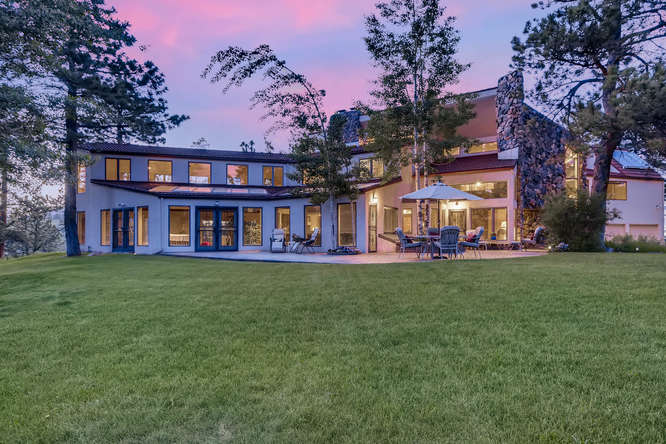
One of the most desirable settings in Soda Creek, complete with wonderful southern exposure, mountain views, gentle meadow, abundant Aspen and Conifer trees and dynamic rock outcroppings. Well is already drilled. This is a Builder’s dream Lot! Very quiet and serene location while still being 5 minutes from shopping and restaurants. Quick trip to Denver or skiing.
Off of the Cul-de Sac and through a gated entrance reveals this special 5.63
acre property. A meandering driveway leads you through the trees to the
house. This distinctive and grand home graces one of the most desirable
settings in Soda Creek, complete with mountain views, a gentle meadow,
abundant Aspen and Conifer trees and dynamic rock outcroppings. So close to
Evergreen shopping and restaurants and quick access to I-70, yet this is a quiet
and serene retreat. Large home with four bedrooms upstairs and a sprawling
floor plan that allows for family gatherings and easy living. Great indoor
swimming pool area that spills out to the South facing lawn.
For more information on 591 Sundown Lane in Evergreen please click here.
You may also call Yvette Putt at (303) 882-2245 or John Putt at (720) 201-1332 to see the property today!

 Facebook
 X
X
 Pinterest
 Copy Link

 November brings a transition to shorter days, colder weather and spending more time indoors. It also brings anticipation, planning and preparation for Thanksgiving and the upcoming winter holidays.



 For many people, a home inspection is a hurdle that has to be overcome during the process of buying or selling a home. But, in fact, it can be a useful tool for buyers, sellers or anyone who plans to get the greatest possible value from their home.
 What do those letters and acronyms mean at the end of your real estate agent’s name? We’re here to answer that question and explain why it might matter to you. Like other professionals, real estate agents have the ability to specialize in certain areas of the business by earning designations. Those acronyms signify that they have achieved a specific designation through extensive training and education. In simple terms, designations enable agents to increase their skills, proficiency, and knowledge in various real estate sectors. They can also provide agents with access to members-only marketing tools and resources which can be an added benefit to their clients.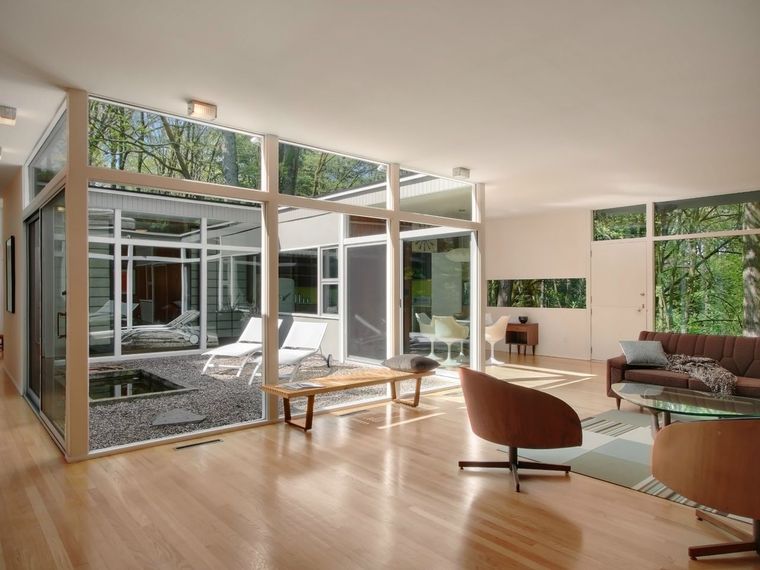




 If you are looking around your home and thinking to yourself that it’s time to de-clutter, the summer months provide an ideal time to hold a garage sale. But if that sounds like too big of an undertaking, there are other options available to you thanks to popular resale sites like eBay and Craigslist. And if even that sounds like too much effort, you might also consider donating lightly used items to charity or sending them off to the dump. Here are some questions to help you decide which method is best for you.
 More than 80 percent of Americans say they want an outdoor living space where they can relax and entertain. And it’s no wonder why. Outdoor spaces extend your livable space, add visual interest, and increase not only your quality of life, but also the overall value of your home. (In some cases, the increase in your home’s value can cover most or all of the cost to create the new space.) Here are some options to consider: